

Why the Strait of Hormuz Matters

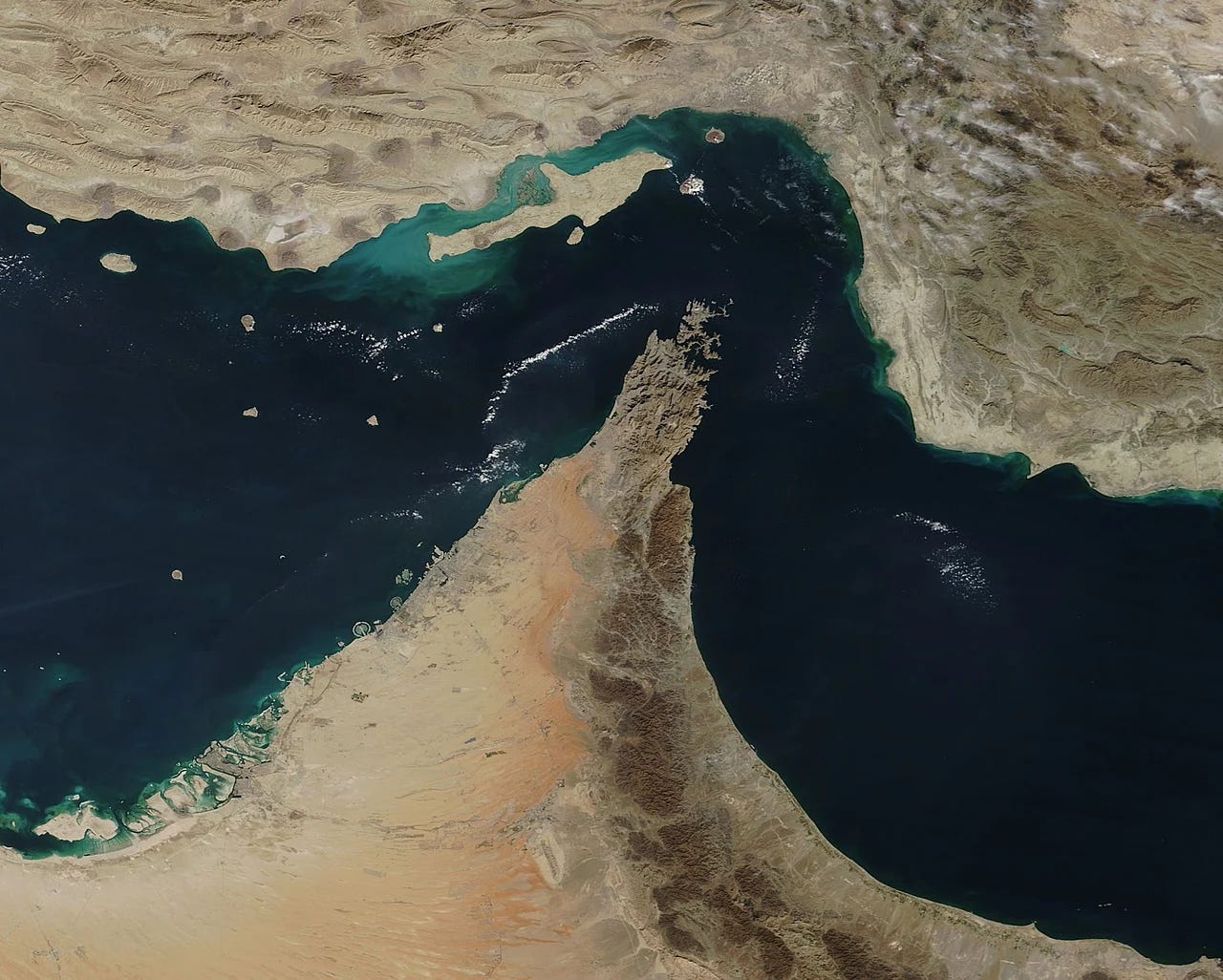
About 20% of the world’s oil moves through one narrow waterway most people rarely think about.
The Big Story
The Strait of Hormuz sits between Iran and Oman, connecting the Persian Gulf to the open ocean. It’s only about 21 miles wide at its narrowest point, but it carries oil from countries like Saudi Arabia, Iraq, and Kuwait to global markets.
Around 17–20 million barrels of oil move through this route each day. Most of that oil goes to Asia, not the United States, but tensions there can still move global oil prices.
The Two Spins
From the Left
When so much global energy flows through one place, it highlights the risks of heavy oil dependence and how that influences American energy prices.
Expanding renewable energy could reduce how much U.S. consumers are affected by overseas disruptions.
From the Right
Keeping shipping lanes like the Strait of Hormuz secure helps protect the stability of global markets that the U.S. economy depends on.
Expanding domestic energy production could further shield Americans from supply disruptions abroad.
What This Means for Us
Most of us will never see the Strait of Hormuz, and the U.S. actually gets most of its oil from North America and domestic production, not this route.
But oil prices are global. If ships can’t move normally through the Strait of Hormuz because of conflict, oil prices often rise and Americans eventually feel it in gas prices and everyday costs.
How They Make Money
Chevron
A single large oil tanker traveling through the Strait of Hormuz can carry around 2 million barrels of oil. At $80 per barrel, that cargo can be worth about $160 million.
When global tensions push oil prices higher, companies selling oil earn more money from the exact same shipment.
Takeaway
Oil companies don’t need to sell more oil to make more money. Sometimes the biggest profits come simply from higher prices on the same barrels.
The Number That Stuck With Me
$1
Because the world uses about 100 million barrels of oil a day, even a $1 price change moves about $100 million in the global market.